As we begin a new year, Minnesota is once again in the national spotlight. Tragic events in our community have thrust our state into the epicenter of social and political discourse. Following the news can be disheartening and exhausting. Which is why, in times of uncertainty, I appreciate those places where I find hope.
In this moment, what resonates with me are the countless stories of Minnesotans helping each other. Whether it’s delivering groceries, supporting mutual aid networks, sharing financial resources or making our voices heard, we are showing up for our neighbors every day. (Even subzero temperatures can’t keep us from caring for our community.)
Even as we face new challenges, when I reflect on our impact in 2025, my hope is renewed. I am proud to be a part of an organization that shows up when our community needs us most. And I’m reminded of what’s possible when we work together.
For more than 110 years, Greater Twin Cities United Way has been a cornerstone of our community — fortifying our nonprofit network, responding to urgent community needs and uniting people in support of our vision of a community where all people thrive regardless of income, race or place.
Your support allows us to be a responsive and indispensable partner to nonprofits in our region. Together, we maximize the collective impact of the nonprofit sector by connecting leaders, training teams, and providing grants to sustain and grow the work of organizations who are meeting urgent needs throughout our community.
Every three years Greater Twin Cities United Way invests in a cohort of nonprofits through our Community Investment grants. These multi-year partnerships provide organizations with flexible funding, technical assistance and vital connections that help keep our region’s nonprofit sector strong and agile.
In April 2025, we announced $9.8 million in Community Investment funding to 98 local area nonprofits who are focused on ensuring people across the nine-county metro area have access to stable housing, food security, educational success and economic opportunity.
For nonprofits who are dealing with many unknowns when it comes to federal, state and local funding right now, a multiyear, unrestricted grant provides much-needed financial stability in a time of turmoil.
Each of these community-centered organizations also brings a deep understanding of the challenges facing our region. And our program officers work closely with each partner to provide targeted support, make connections to additional resources and foster broad collaboration throughout the nonprofit sector.
These relationships are essential when crises arise and we need to mobilize quickly to meet our community’s most urgent needs while still creating lasting change.
Last summer, as federal funding cuts threatened to destabilize the nonprofit sector, we partnered with 10 other organizations and foundations to create the MN Forward Pooled Fund. This collaborative fund invested $1.35 million in grants to 27 organizations across Minnesota to help meet emerging needs and strengthen communities most impacted by federal funding shifts.
By combining multi-year, collaborative partnerships with flexible funding, we’re affording nonprofits the stability they need to be responsive and strategic in their work supporting our community.
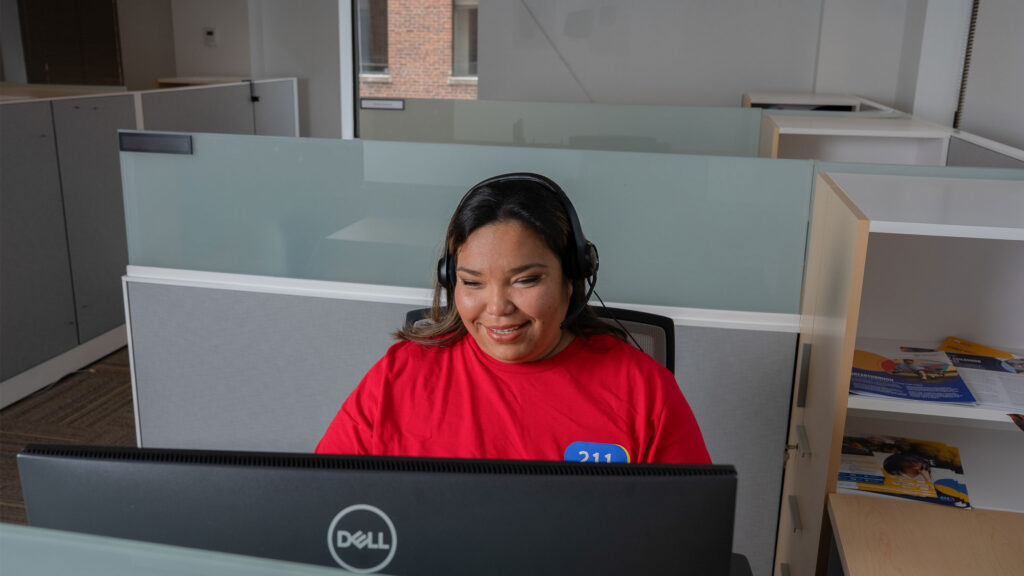
Throughout 2025, as the nonprofit sector navigated complex and rapid shifts in federal funding, our deep connections enabled us to quickly respond to needs we learned about in real-time conversations with partners and with the individuals who reach out through our 211 resource helpline. One way we supported nonprofits in need of immediate assistance is through rapid response funding.
For instance, when Dakota Woodlands, the only shelter for families experiencing homelessness in Dakota County, experienced a gas leak and needed a new stove, we provided an urgent needs grant. As a result, the organization was able to replace the stove and continue serving families.
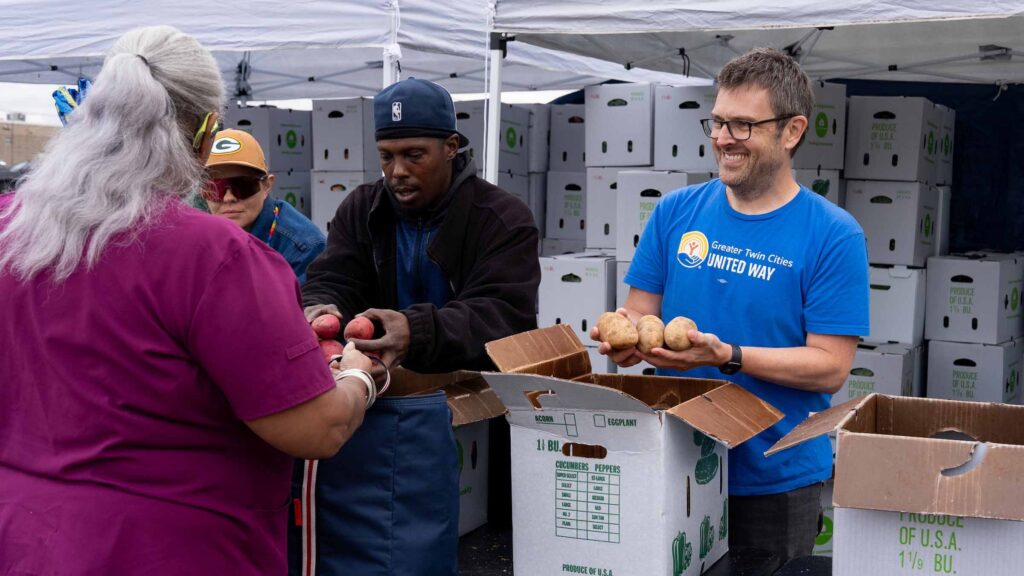
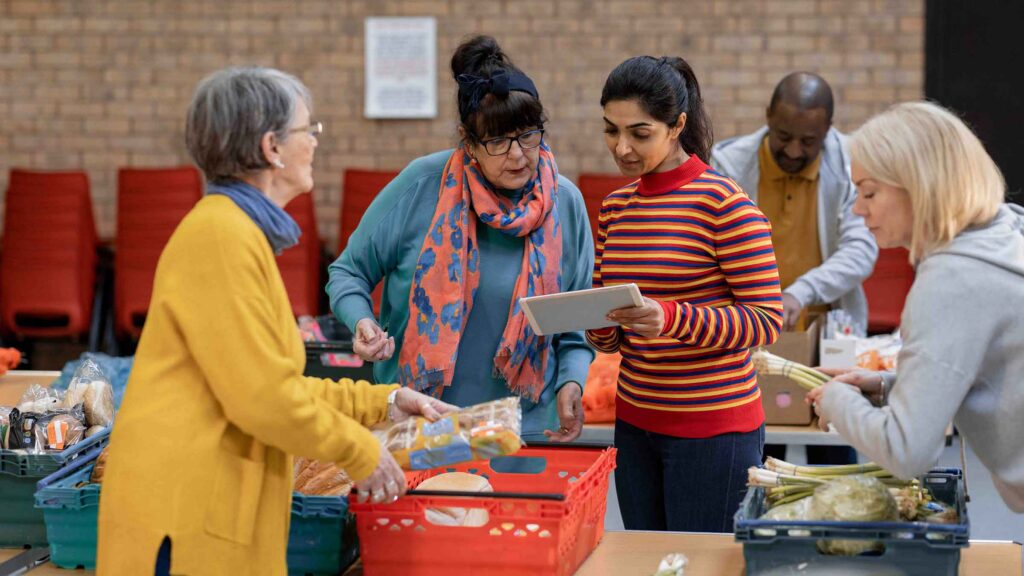
Last fall, when the government shutdown disrupted SNAP benefits, compounding a growing food emergency in our region, we mobilized to provide immediate food relief so our neighbors could put meals on the table. Through the Emergency Food Relief Campaign, we distributed $145,000 in emergency grants to help nonprofits increase food supply and cover infrastructure costs, like buying a second refrigerator to store more fresh produce.
At the same time, we quickly directed funds to two Full Lives partners who were working with farmers struggling to sell their late‑season produce. Together, they organized a food rescue — purchasing items that otherwise would have gone unharvested. The effort culminated in five food distribution events, delivering more than 18,000 pounds of food and serving more than 3,000 people.
As a human-centered organization, made up of individuals who live and work in this community, we share the emotional toll this past year has had on our neighbors. Which is why, at a time of immense and unbearable tragedy for families and educators in our community, we provided a rapid response grant to support the mental health of teachers at Annunciation Catholic School.
These are just a few examples of how we were able to deploy dollars into community in real time to maximize our impact last year. We continue to be in close conversation with our partners to identify and respond to quickly changing needs.
None of this would be possible without the dedication of the donors, volunteers, advocates and corporate partners who support our work. We are fortunate to have a robust network of supporters that understand the unique value United Way brings to our community.
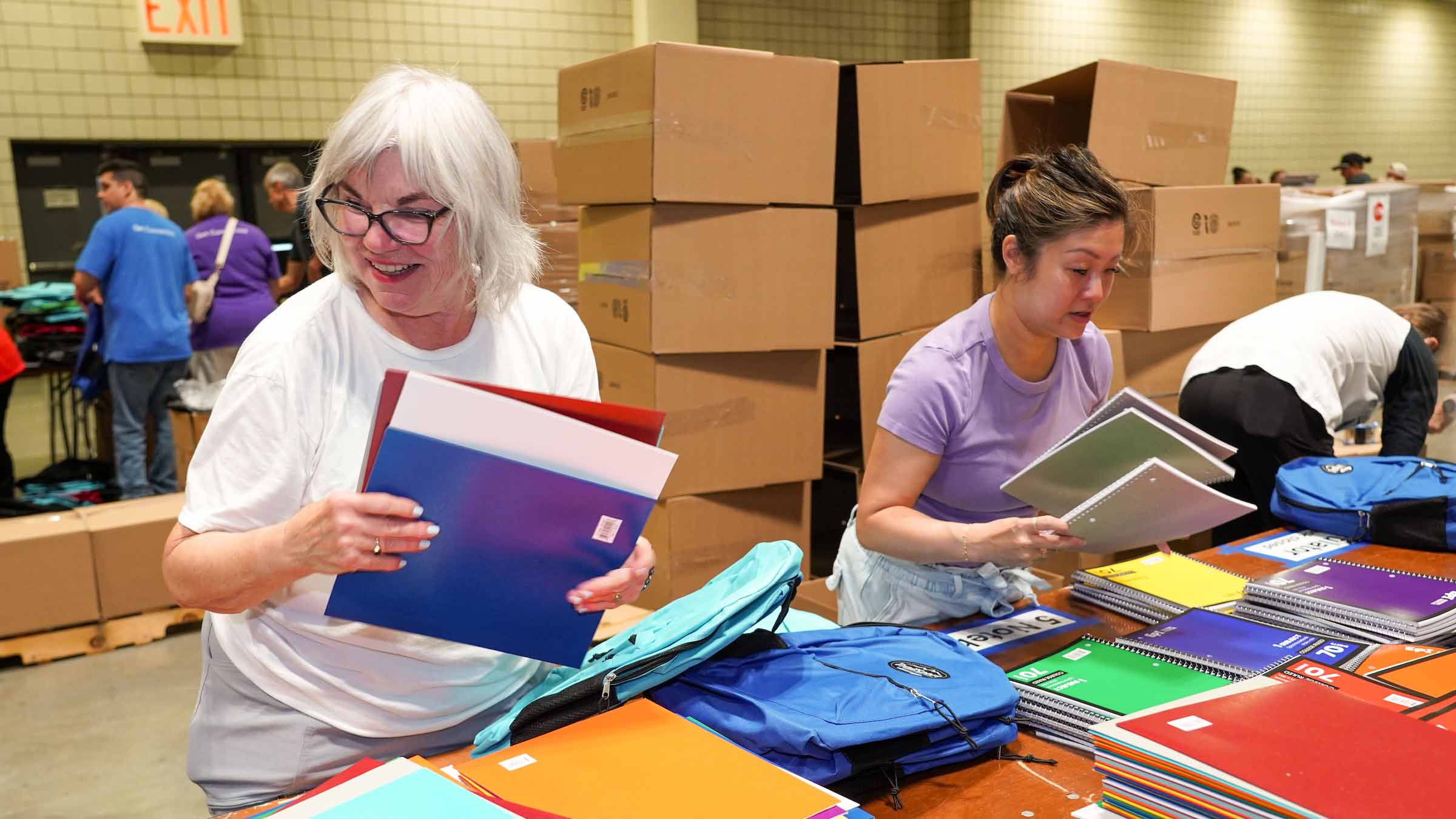
In 2025, we celebrated the 10th anniversary of Action Day. Our largest community-wide volunteer initiative, each year Action Day brings together volunteers, donors, corporate partners, professional sports teams, nonprofits and school districts to ensure all students have the supplies they need to succeed in school.
Since our inaugural year, Action Day has grown from 6,000 backpacks to 63,000 backpacks in 2025, because our community continues to step up and help level the playing field for young learners. A decade later, we’ve seen how Action Day is about more than providing students with backpacks and school supplies: it’s about showing our youngest community members they can depend on us to help them access the future they dream of.
We also celebrated the 20th anniversary of Greater Twin Cities United Way’s Tocqueville Society. This group of innovative, philanthropic leaders in the Twin Cities are dedicated to maximizing their collective impact to help solve our community’s most significant challenges.
The Tocqueville Society recognizes United Way donors giving annual gifts of $10,000 or more. Thanks to the efforts and generosity of our members, our local chapter is recognized nationally for being a leader in philanthropy.
In 2024, Tocqueville members gave $6.8 million to Greater Twin Cities United Way, providing a crucial foundation of support for our community. We are deeply grateful to our local chapter for their 20-year commitment to Greater Twin Cities United Way and our region.
When our community faces challenges, Greater Twin Cities United Way is here. We are stronger when every neighbor – regardless of income race or place — has access to nutritious food, stable housing, opportunities to learn and earn and a trusted partner to call in times of crisis. With your support, we will continue to show up when our neighbors need us most — bringing people together and creating unity through understanding and connection.