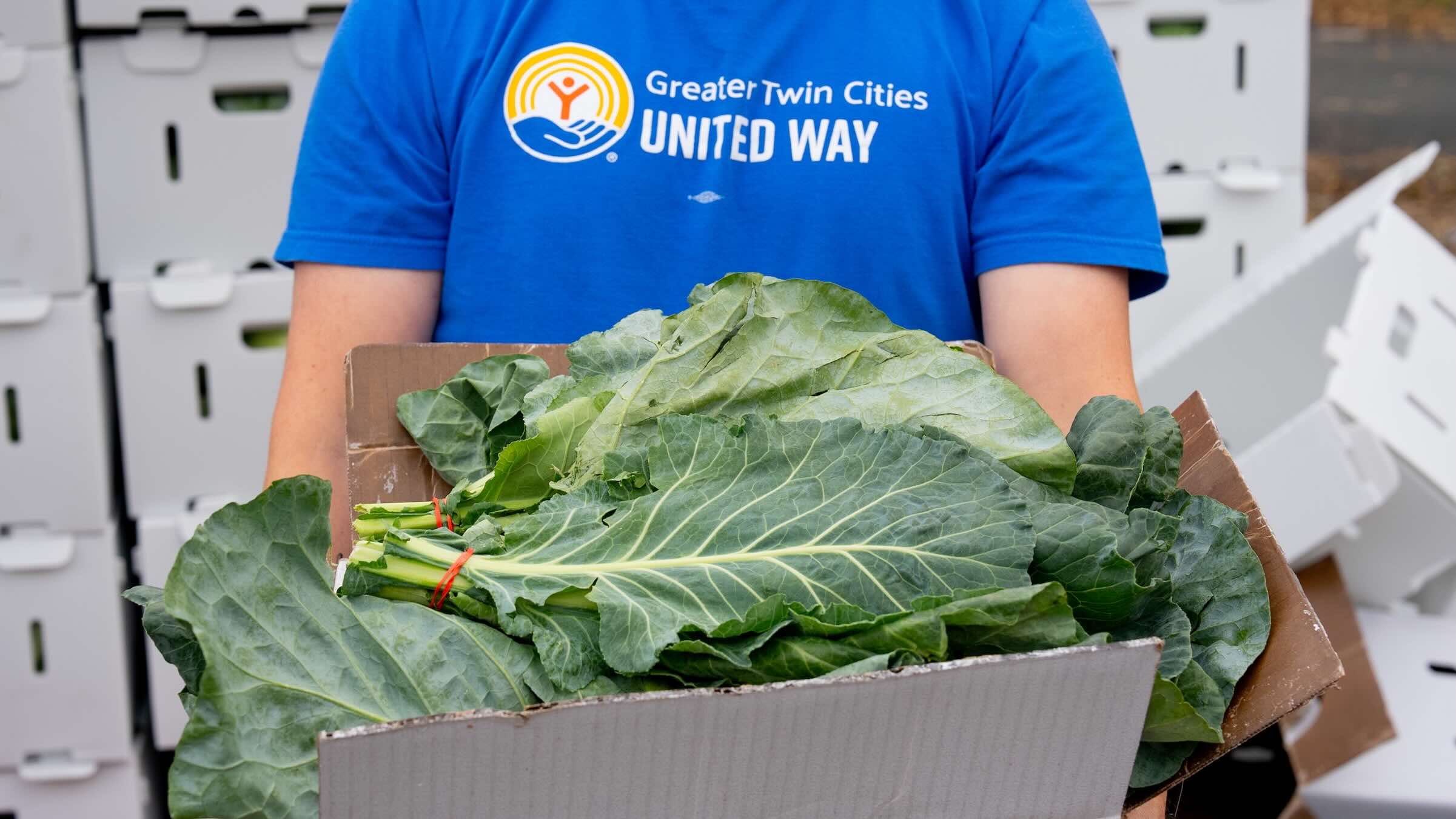
My name is Katie Chatfield and I’m a program officer on the community impact team at Greater Twin Cities United Way where I lead Full Lives, an innovation initiative for food justice. I’m excited to share about how our work in food security increases access to nutritious, culturally relevant meals while strengthening our regional food system so everyone has the food they need to thrive.
We know that nutritious food fuels success in school, work and life. Yet, in our community, one in five children live in households that struggle to afford groceries. One in three households in Minnesota can’t make ends meet.
As a registered dietitian who has spent nearly a decade working in community food systems, public health and nutrition programs, I understand the complex systems that often inform individual food choice. Rising costs and economic challenges; lack of transportation or proximity to grocery stores; and uneven food distribution are all common barriers to food access.
No one should have to choose between putting food on the table and paying bills. That’s why Greater Twin Cities United Way works to ensure people have access to food that is nutritious, culturally relevant and affordable, toward long-term food security.
Our strategies focus on meeting urgent needs by supporting emergency food shelves and meal programs, while making lasting change to achieve food justice by strengthening our regional food system.
Visits to food shelves have been steadily rising in Minnesota for many years. Food is the fastest growing reason folks reach out to our 211 resource helpline. We meet these urgent needs by connecting people experiencing food insecurity to emergency food services and meal programs to help put food on the table. Often, a conversation that starts with food will lead operators to provide additional resources on job training, help paying bills and other services that ultimately increase food security.
Recently, disruptions to federal funding and changes to eligibility for SNAP benefits, along with the effects of Operation Metro Surge, have strained access to food resulting in significant increases in requests to 211 for food resources. During a January peak, calls and texts related to food assistance were up 197%. Additionally, requests from Spanish-speaking households increased dramatically and were at one point up 1,646%. Even with the drawdown of federal ICE activity in Minnesota, demand for these resources remains elevated as families deal with the lasting economic impact.
Through our multiyear Community Investments partnerships, we provide vital support to meet the nutritional needs of people in the nine-county metro. To ensure a strong network of nonprofits, we provide unrestricted funding and free consulting services to partners delivering emergency food services and connections to benefits so families can increase their food security.
Once a minute, a neighbor facing hunger received groceries or a hot meal from a Greater Twin Cities United Way partner.
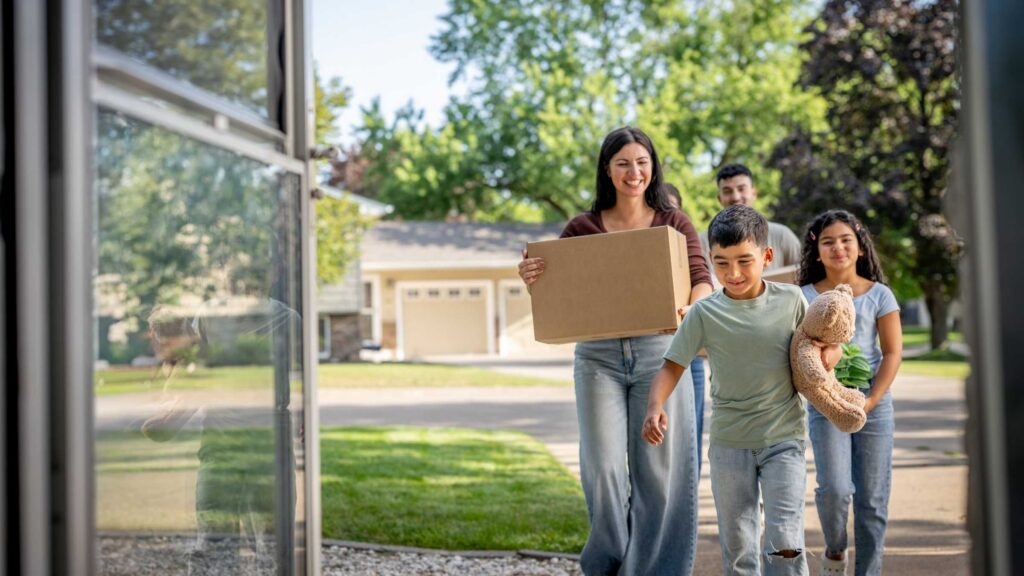
As our partners see dramatic increases in the need for emergency food services, they leverage our flexible funding, technical assistance and leadership support to build their capacity to respond. For example, during Operation Metro Surge, food shelves began expanding access by delivering food to people in their homes. We supported partners as they pivoted to this more costly and logistically challenging way to work.
In our region, many communities lack access to nutritious, affordable food. Because the effects of these food injustices extend beyond households to a community’s education, economic and health outcomes, we lead the Full Lives initiative to transform the ways food is produced, distributed and consumed in our region to create a more equitable food system for all Minnesotans. Through Full Lives we invest in community-led collaboratives to support food access.
In December 2025, we marked the conclusion of Phase 1 of our Full Lives food initiative. Over our 18-month partnership, Full Lives supported efforts to strengthen our regional food system, fostering new forms of collaboration between 19 nonprofits and grassroots organizations doing important work in our community.
Learn more about key takeaways from Phase 1 and what’s next for Full Lives.
Partnerships like these enable Greater Twin Cities United Way to respond quickly when real-time needs arise. Last fall, when the government shutdown disrupted SNAP benefits, we quickly directed funds to two Full Lives partners who were working with farmers struggling to sell their late‑season produce. Together, they organized a food rescue — purchasing items that otherwise would have gone unharvested. The effort culminated in five food-distribution events, delivering more than 18,000 lbs. of food and serving more than 3,000 people.
During this we also launched the Emergency Food Relief Campaign, which distributed $145,000 in emergency grants to help nonprofits increase food supply and cover infrastructure costs. This type of responsive support can look like providing flexible funding that allows a nonprofit to buy another refrigerator to carry more fresh produce to meet increasing demand. Or supporting additional staff to make more food deliveries possible when individuals and families impacted by the ICE surge didn’t feel safe leaving their homes.
Across our region, Greater Twin Cities United Way is building partnerships to meet our community’s urgent food needs and invest in a thriving local food system.
Learn more about our holistic approach to promoting food security.
In support of food security for all Minnesotans, we advocate for policies and practices that increase equitable access to food that nourishes and sustains individuals and families, supports our local economy and creates opportunities for food entrepreneurs.
Every spring we partner with The Food Group for Hunger Day on the Hill, an opportunity to meet with lawmakers and share stories and insights about food insecurity in our region.
Together with our coalitions and partners, we supported advocacy at the Capitol that led to free school meals for all Minnesota students. This, combined with additional funding to expand the state’s Farm to School grant program so students get more Minnesota-grown foods, provides young people with essential nourishment to improve educational outcomes.
Finally, our community is home to many cultures, each with foods families love and know how to cook. To ensure our neighbors facing hunger can get familiar foods, we are working to increase access to ready-to-eat and culturally specific foods at food shelves. Flavors of Our Community unites volunteers, nonprofit and corporate partners to remove barriers and make familiar, easy-to-prepare and loved meals accessible for more people living in the Greater Twin Cities.
With the support and guidance of our nonprofit partners around the Twin Cities, we’ve developed 16 pantry, spice and baking packs representing six cultures, and four ready-to-eat meal and snack packs. Each pack contains a variety of food items — like beans, bamboo shoots, spices, oatmeal packs and granola bars — that are nutritious, culturally relevant to Afghan, East African, Indigenous, Karen, Latine or Southeast Asian food preferences or can put food on the table when cooking isn’t an option.
No matter where we live, the flavors of our community, and the dignity to prepare our own meals, makes us feel at home. We’re grateful to our community for supporting Flavors of Our Community each year. In 2026, nearly 3,000 volunteers packed 9,295 food packs, making it possible to provide over 32,000 culturally familiar meals to families across the Twin Cities. Additionally, Flavors of Our Community received a $200,000 grant through Minneapolis Foundation’s OneMPLS Fund to support our work meeting immediate food needs for individuals and families impacted by the ICE surge.
United is the way to food security for all. Our work in food is possible because of the support of donors and volunteers like you. Together, we’re building a future where all Minnesotans can get the foods they need to thrive.
Here are a few ways you can support this work: