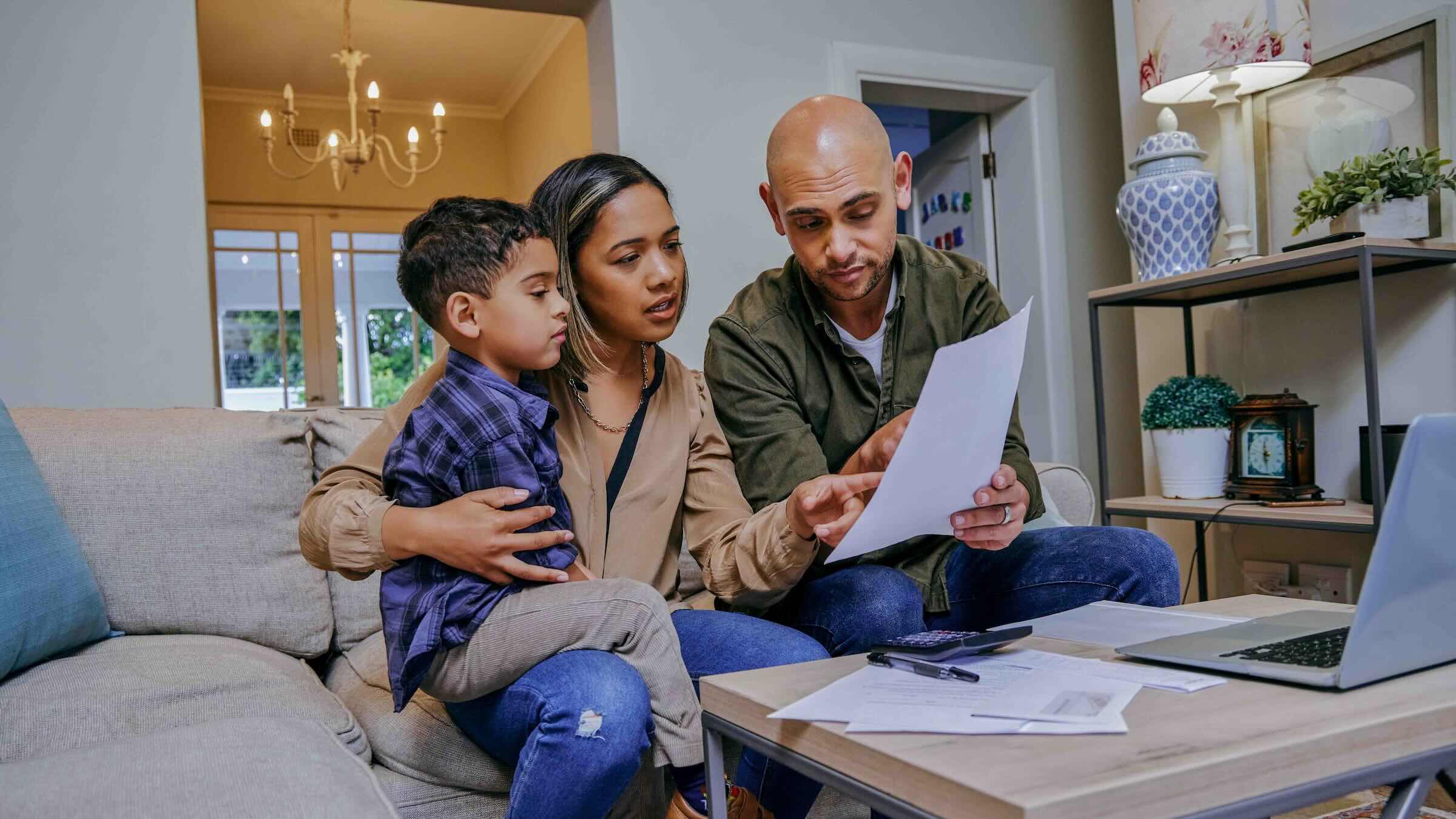
ALICE is your family, friend, neighbor, or you, who works full time, but doesn’t earn enough income to afford their basic needs. Like many of us, ALICE works every day to strengthen our community by keeping our businesses running, caring for our loved ones and making the Greater Twin Cities a better place to live.
Every day, ALICE households are forced to make difficult choices, like deciding whether to pay for utilities or a tank of gas; whether to buy food or fill a prescription; whether to pay for childcare or miss work.
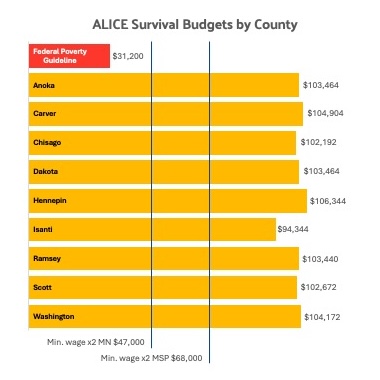
For example, this is what it takes to cover the basics for a family of four (two adults, two children in childcare) in different Twin Cities counties compared to Federal Poverty Level guidelines
US Federal Poverty Level: $31,200 annually
Hennepin County: $106,344 annually
Isanti County: $94,344 annually
As you can see, the FPL does not come close to covering what it takes to survive in the Twin Cities. Though widely used as a benchmark for measuring financial hardship, this obsolete measure significantly underestimates the true scale of economic distress in our community.
For ALICE households a survival budget means just that, they earn enough to get by, but anything extra is just out of reach. So, saving for the future, or even those unexpected expenses we all experience, is simply not possible.
Is your household ALICE? Discover The ALICE Household Survival Budget →
Supporting everyone in our region to advance above the ALICE threshold is core to our vision of a community where all thrive regardless of income race and place. This is why we invest in:
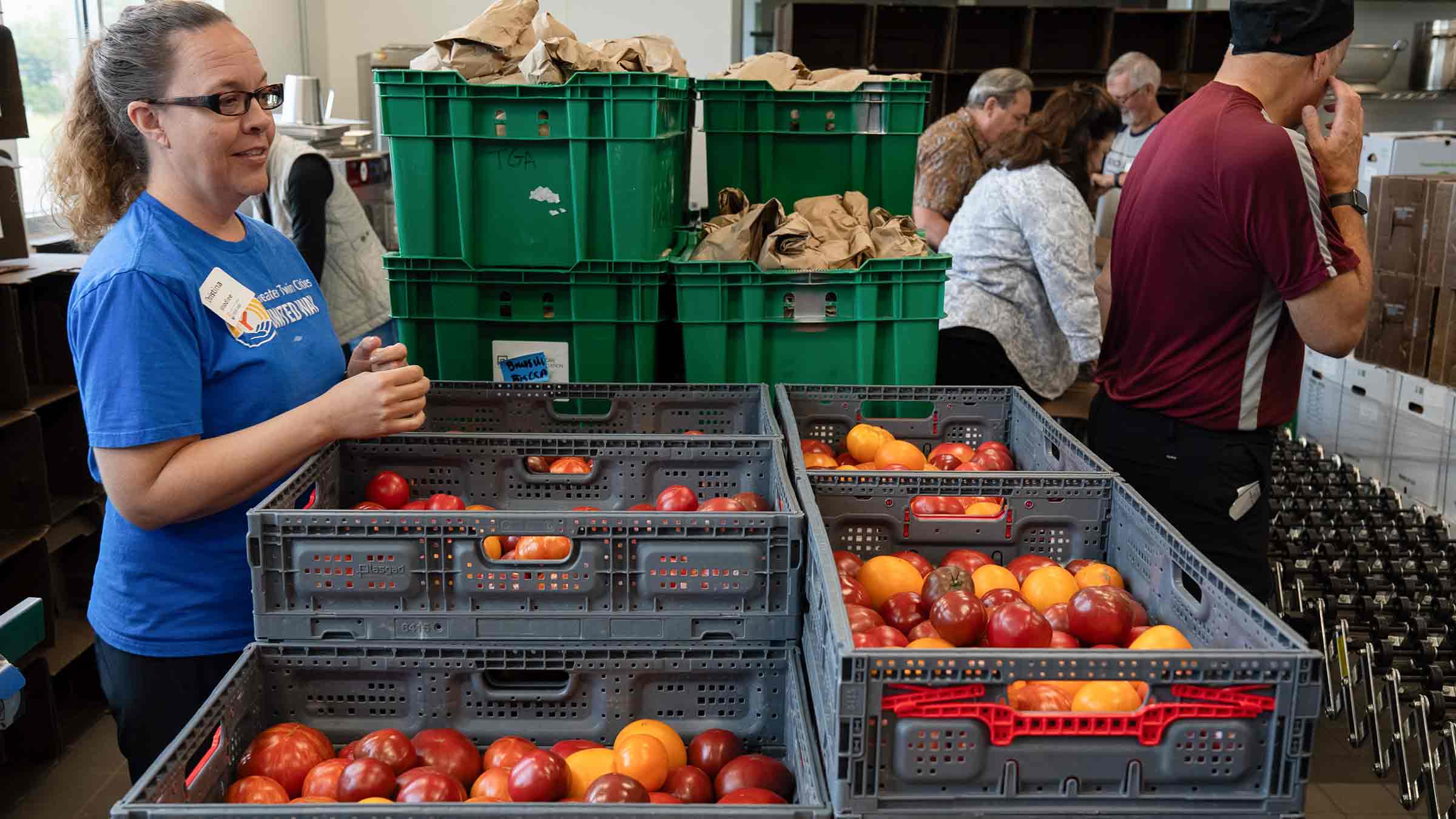
We also lead various volunteer initiatives that help our neighbors meet their basic needs and reduce their budgets, including food, household essentials and school supplies.
Greater Twin Cities United Way and our partners use data from The State of ALICE in Minnesota to inform our development of future funding opportunities, as well as our ongoing advocacy at the state and federal level.
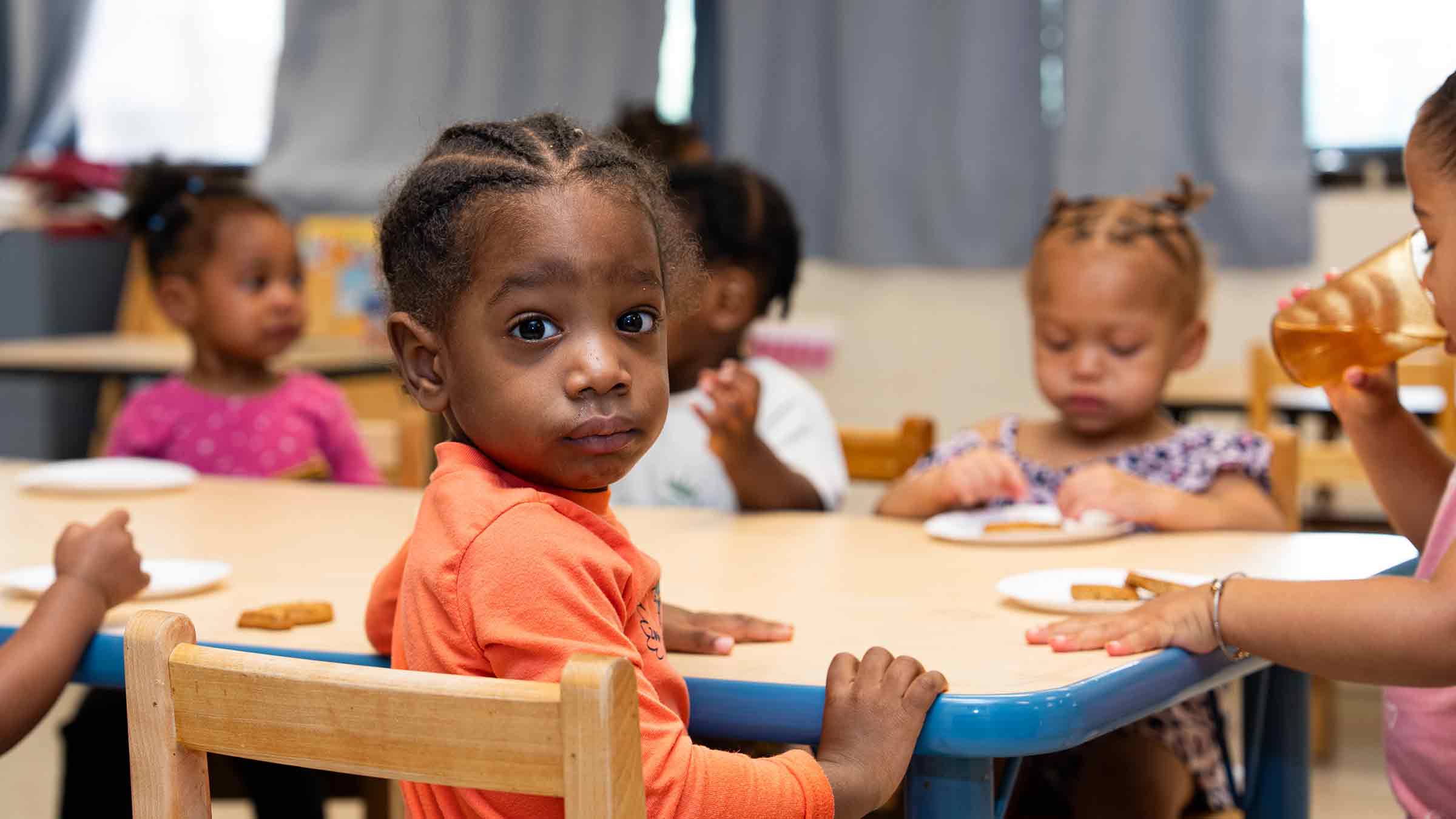
ALICE matters for all of us: taxpayers, employers, families and seniors, rural, suburban and metro. Every neighbor that moves from ALICE to thriving contributes to:
The State of ALICE in Minnesota was developed in partnership between the United Ways of Minnesota (including Greater Twin Cities United Way) and research partner United for ALICE. The report is updated every two years and compiles data on financial hardship in Minnesota.
Traditional measures of poverty, like the Federal Poverty Level (FPL), are obsolete and continue to undercount the number of Twin Cities households experiencing financial hardship. The FPL is calculated using household size and is the same for all 48 contiguous United States. It does not consider cost of living variances by location or the true cost of basic needs.
While 9% of all households in the nine-county Twin Cities metro area earned at or below the FPL in 2024, the latest research shows that 26% of households – nearly three times as many – were ALICE® (Asset Limited, Income Constrained, Employed). These households earned more than the FPL, but not enough to fully cover the costs of basic needs. Combined, an estimated 35% of Twin Cities households fell below the ALICE Threshold of Financial Survival in 2024.
The Greater Twin Cities United Way's 211 resource helpline provides free and confidential health and human services information for people in Minnesota. Our call specialists are available 24 hours a day, 7 days a week to connect individuals with resources and information, including food, housing, employment and more. Learn more about the 211 resource helpline.
Our community is stronger when every neighbor — regardless of income, race or place — has nutritious food, stable homes, a quality education and economic opportunity. Join us as we work toward our vision of a community where all people thrive.
Your donation helps us meet urgent needs today, while supporting our work to make lasting change for a future where all Minnesotans thrive.
Unite with thousands of volunteers to meet urgent needs through individual, group and company volunteer opportunities.
Join our Advocacy Network for real-time updates and opportunities to speak out to your lawmakers.