No one should ever be in the position of choosing between feeding their family and paying for essentials like rent or medicine. But in recent months — due to already-strained food shelves, rising food costs and ongoing threats to federal funding for basic needs like food and housing — thousands more families across the Greater Twin Cities are facing impossible choices.
Which is why, when the government shutdown disrupted SNAP benefits last fall, we did not want families to have to worry about how to feed their families in our region. Greater Twin Cities United Way mobilized donors and volunteers to provide immediate food relief for our neighbors.
Our community partners providing food relief were responding to record-breaking demand and were overwhelmed — a need that continues today. So, in October, we launched the Emergency Food Relief Campaign to meet this urgent need and help ensure every child, every family, and every neighbor has access to food during this crisis and beyond.
I am incredibly grateful and encouraged by how community has shown up to support their neighbors. Our Emergency Food Relief Campaign distributed $145,000 in emergency grants to help nonprofits increase food supply and cover infrastructure costs. Volunteers assembled 6,674 meal packs to ensure local food shelves are stocked with key staples. And our 211 resource helpline continues to connect neighbors to emergency food services and meal programs.
We know that without food our kids can’t focus on learning, and adults can sustain what it needed to take care of families and responsibilities. Yet, in our community, one in five children live in households that struggle to afford groceries. One in three households in Minnesota can’t make ends meet. And despite the resumption of SNAP benefits, over 440,000 Minnesotans – including children, seniors and working families – experienced disruption in their critical food support that continues to create ripple effects on their household stability. As a result, many will be behind on rent, utilities and other household expenses.
Most families who access SNAP benefits are hardworking families, or what we call ALICE: Asset-Limited, Income-Constrained, Employed. These are our friends, family and neighbors who work hard but don’t earn enough to meet their basic needs. They’re teachers, healthcare workers, daycare providers and cashiers – people who keep our economy going but still face hunger. ALICE families make difficult choices every day, but the federal government shutdown, disruptions to SNAP and anticipated future funding cuts have already pushed families from hardship into crisis, where every choice means giving up something essential to survive.
When challenges like this affect our whole region, our deep connections with nonprofits, businesses and public partners enable us to respond quickly and strategically. Throughout this period, our grantmaking team maintained active communication with our nonprofit partners — identifying urgent needs and new opportunities for targeted investment.
Responding to real-time community need, we deployed $145,000 in responsive grants through the Emergency Food Relief campaign to nonprofit partners who run food shelves and other food distribution programs.
In our first phase, we distributed $105,000 in emergency grants to help nonprofits get food from farms to families. In one example, we quickly directed funds to two Full Lives partners who were working with farmers struggling to sell their late‑season produce. Together, they organized a food rescue — purchasing items that otherwise would have gone unharvested. The effort culminated in five food distribution events, delivering more than 18,000 pounds of food and serving more than 3,000 people.
In our second phase, we distributed $40,000 in additional emergency grants to eight nonprofit partners with flexible funds to support their food shelves. Nonprofits could use these funds to increase food supply and cover infrastructure costs.
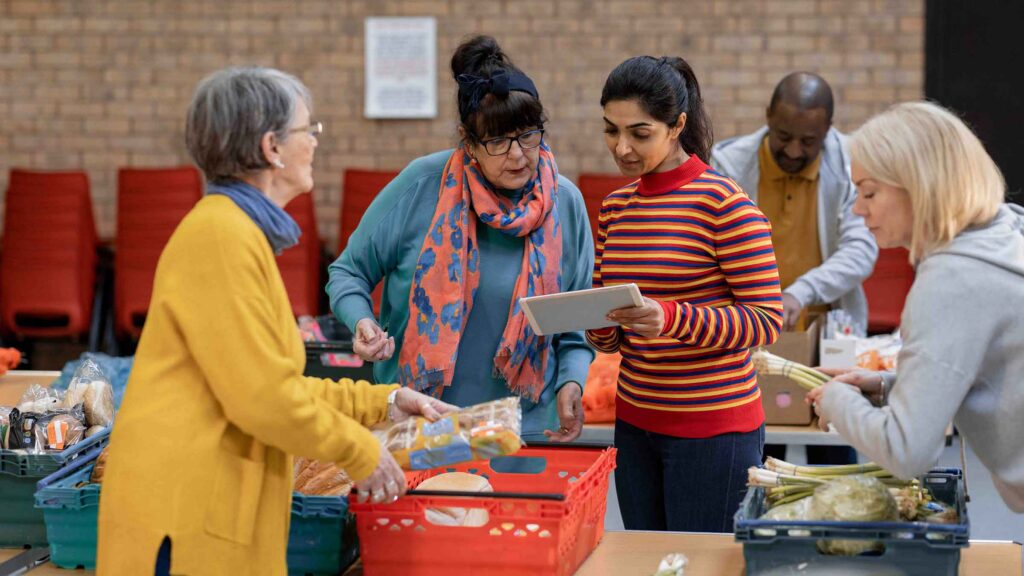
Even before the government shutdown, our region’s food shelves were straining to meet growing needs. While community volunteering and food drives helped food shelves weather the crisis, many food shelves faced new challenges to accommodate the outpouring of support. This funding helped mitigate those costs by giving organizations the flexibility to invest in areas like staffing, transportation and equipment. For example, buying a second refrigerator to store more fresh produce.
Without this flexible funding, nonprofit partners likely would have needed to divert funds or resources from other programs or rely on uncertain reimbursement arrangements with the state, creating financial strain and limiting responsiveness during a critical time.
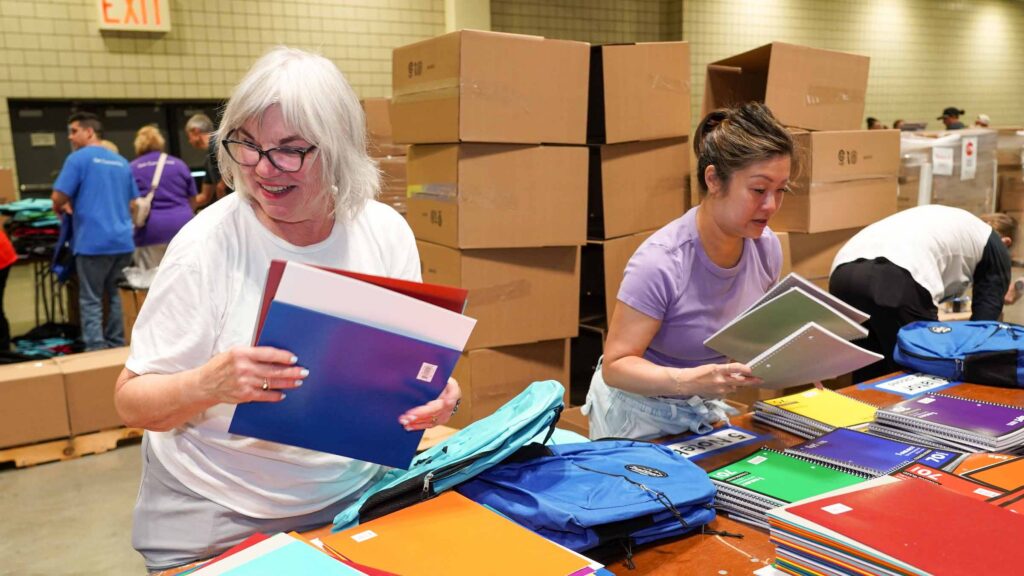
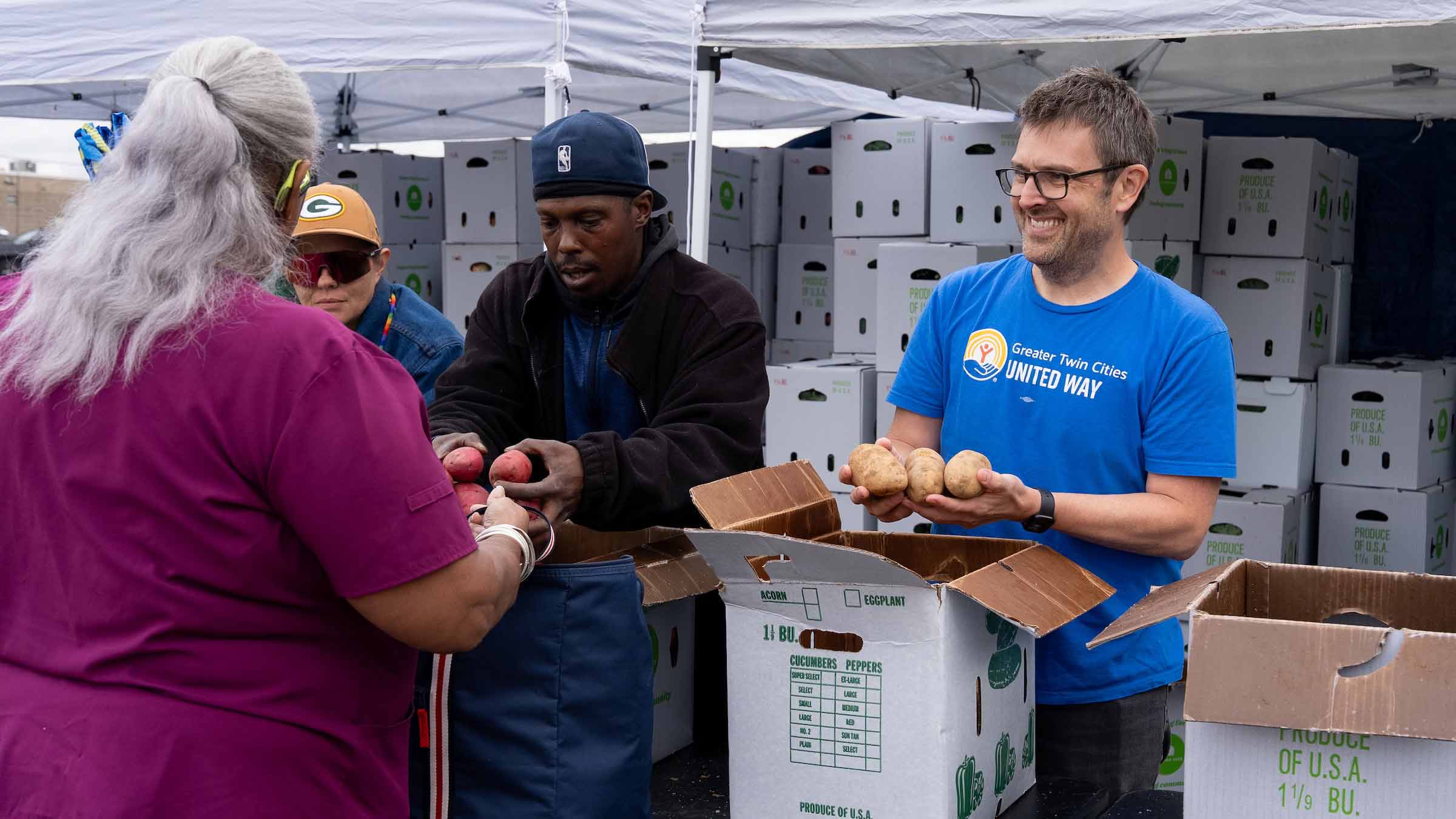
Our Volunteer United team continues to mobilize volunteers to deliver the most in-demand items where they can make the biggest difference. To date, volunteers have packed 6,674 meal packs for local food shelves, resulting in 16,173 meals for our neighbors experiencing hunger.
Our friends and neighbors came together to complete 43 volunteer-at-home projects. These individuals and groups gave of their time and resources to purchase, assemble and drop off packs filled with food staples for our neighbors.
We also partnered with corporate groups to host seven volunteer food packing events throughout the Twin Cities. Led by our Volunteer United team, employees from these organizations worked together to pack emergency food kits to supplement the availability of important staples at our region’s food shelves. This included culturally specific food items to ensure everyone in our community has access to food that is nutritious and familiar.
The estimated retail value of food distributed into community through Emergency Food Relief campaign volunteer efforts amounted to $71,052, helping ease the pressure on already strained food shelves. This level of impact would not have been possible without the generous support of our volunteers, donors and corporate partners.
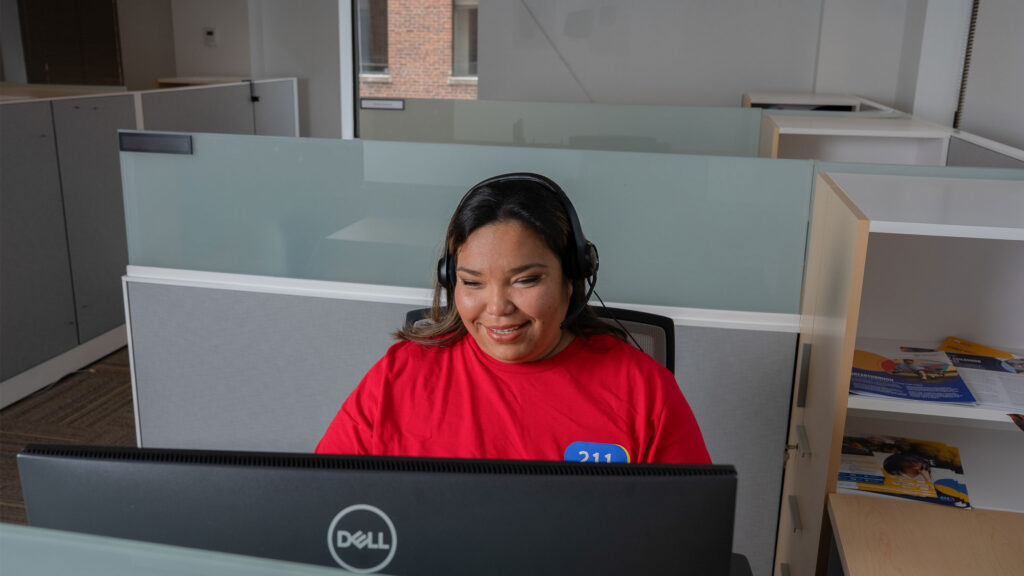
Requests for food assistance are the fastest growing area of need for callers reaching out to United Way’s 211 resource helpline. From October 19 to November 9, we saw a 232% increase in weekly requests for food resources. When people experiencing food insecurity contact 211, we connect them with emergency food or meal program resources to help put food on the table.
One of these calls came from an essential government worker who had been going to work, but not getting paid for more than a month. She is the sole earner for her family and whatever savings they had had been depleted. When she received an eviction notice, the 211 specialist was able to identify a community organization that not only could address the delinquent rent but, supported her in utility payments, food resources and other needs when she was turned down from the county due to her lack of income. This community based approach was the bridge needed to sustain her family through a difficult time.
To ensure a robust network of community organizations can meet this need, we support 27 nonprofits working in food security through our multiyear Community Investments partnerships. These direct-service partners provide access to food shelves, meal programs and long-term food security services.
At Greater Twin Cities United Way, we meet urgent needs while making lasting change to ensure our neighbors have food to eat today, tomorrow and into the future. In times of crisis and always, we unite community members, business and nonprofits to increase access to nutritious, culturally relevant meals while strengthening our regional food system, so everyone has the food they need to thrive.
This crisis is not over, and our work continues. Even as we share these results, ICE activities in the Twin Cities are affecting people’s ability to work, get food, and meet other basic needs for themselves and their families. Many of our neighbors are avoiding traveling to work or school to stay safe, they are missing out on earnings and school meals. Partners report that the already unprecedented need for food is up dramatically. And because shopping is risky, nonprofits are responding with home deliveries – a more costly and logistically challenging way to work.
In this challenging time, Greater Twin Cities United Way continues to support our community by moving forward as a responsive and dependable partner. Together with our partners and caring neighbors like you, we will be there when our community needs us most.